Okay, so here’s the thing. Most brands think bigger is always better. Mega followers, mega reach, mega budgets. That’s what they’re chasing. It’s not working anymore. Two years ago, we were skeptical too, honestly. When clients kept asking about micro-influencer campaigns, there was that instinct of “yeah but… won’t celebrity endorsements work better?” Classic agency thinking. Play it safe. Go with what everyone knows.
But then something happened. The data started showing us something completely different. And we couldn’t ignore it anymore. Here’s what we learned: Instagram followers don’t actually matter nearly as much as everyone thinks they do. What matters is engagement. What matters is whether people actually care. What matters is real community.
The audience has gotten SO much smarter. They can smell inauthentic sponsorships from a mile away. Those perfectly polished celebrity posts where it’s crystal clear the person has never actually used the product? Everyone sees right through it now. It’s over. That era is done.
But the micro influencers? The ones with 10,000 to 100,000 followers? They’re doing something completely different. They’re building actual communities. Real communities. With real people. People who actually care. People who actually listen.
That’s the shift that changed how we think about this entire space.
Micro Influencers Actually Deliver Better ROI (And Way Better Than Expected)
So we ran this campaign. Partnered with creators in the micro-influencer space, gave them a modest budget, and said: “Let’s see what actually happens.”
Three weeks later, the sales numbers were different. In a good way.
Turns out, influencers with 10,000 to 100,000 followers? They’re getting 3 to 5 TIMES higher engagement rates. Not vanity engagement either. Real engagement. People actually click links. People are actually buying stuff. People actually become customers. Real revenue. Not just dopamine hits from likes.
When we dug into the comments sections, something became clear. These micro-influencers’ followers were actually talking to them. Having conversations. Actually engaging. That’s not normal for Instagram. That’s special. That’s a real community.
See, when someone with 50,000 followers—real followers, actual people who love their content—recommends something? It hits differently. It feels like your friend just told you about this amazing product. Not like you’re watching an advertisement. Which is ironic because it IS an ad, but because it doesn’t feel like one, it actually works. Way better.
Now compare that to a celebrity with 5 million followers. Sounds huge, right? But here’s the reality. Maybe 0.5% of those people actually interact with anything. Most followed years ago, don’t even see the posts in their algorithm feed, or just scroll past without caring. So actually? When you look at what’s really happening, micro-influencers aren’t “micro” at all. The strategy is kind of genius.
Why Indian Brands Are Waking Up to This (Finally)
India’s influencer market right now? It’s absolutely bonkers. And in the best possible way. Everyone’s on Instagram. YouTube’s where everyone’s hanging out. New apps launching constantly. The amount of time Indians are spending scrolling through content is just… It’s wild. Actually insane when you look at the numbers. But here’s what most brands are missing. They’re looking at the big picture and missing what’s actually happening underneath.
The micro influencers. The nano influencers. THOSE people? They’re crushing it. Like actually crushing it. They’re building real audiences. Real engagement. Real impact. And honestly, this opportunity was hiding in plain sight.
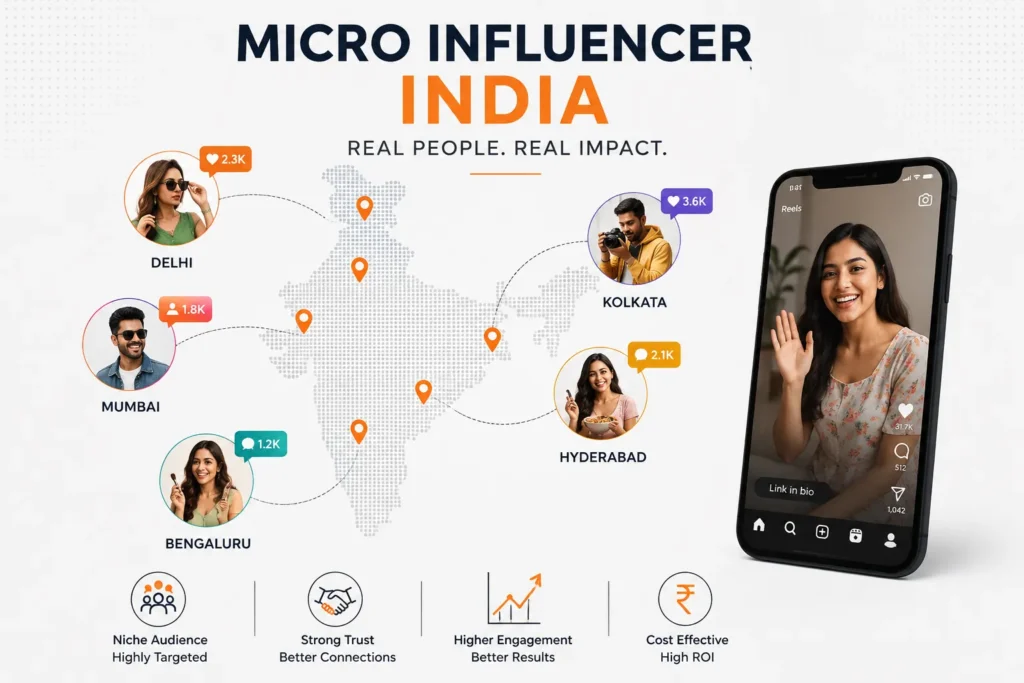
What’s particularly exciting about the Indian market is the sheer diversity. You’ve got micro-influencers for literally everything. EVERYTHING. Want to reach fitness enthusiasts in Mumbai? There’s someone for that. Fashion niche in Bangalore? Absolutely exists. You want food creators blowing up in Delhi who are genuinely talented? Tons of them. Beauty experts in Hyderabad who’ve built insanely loyal, obsessed communities? Yeah, they’re out there.
This is what makes India so good for this right now. It’s not just “oh India’s market is growing.” It’s that you can actually TARGET. You can find hyper-specific audiences in hyper-specific regions with creators who actually speak their language. Sometimes they literally speak their language—we’re talking multiple regional languages here.
We worked with a regional beverage brand recently who tried one micro-influencer campaign in Gujarat. One. It did more for them than a full national celebrity campaign had done in an entire year. The locals actually connected with it. It felt real. It didn’t feel like some corporate thing handed down from Bombay by people who don’t understand the market. That’s gold. That’s actual gold for brands.
This is why we’re so pumped about it. Especially if you’re selling something regional or if you want to build genuine communities in specific cities. You don’t need a national celebrity. You need someone authentic who gets the vibe of that place.
An experienced micro-influencer marketing agency in India can match brands with exactly the right voices for specific markets and regions. No random shots in the dark. No wasted spend on audiences that don’t care. No awkward situations where the creator and brand just don’t vibe. It’s actually strategic. It’s actually smart.
The Real Numbers Behind Micro Influencer Campaigns (The Data Doesn’t Lie)
Here’s what we’re seeing in the trenches:
Cost Efficiency: This one just… it blows our mind every time. The pricing difference is absolutely wild. A micro-influencer charges like a tenth—sometimes less—of what a celebrity charges. ₹2-5 lakhs for ONE celebrity post. One. That’s a lot of money for one post that might not even perform that well. Versus a micro influencer? ₹10,000 to ₹50,000.
Think about that for one second. Instead of betting everything on one celebrity, you could do campaigns with 20, 30 micro-influencers. Different niches. Different audiences. Multiple content pieces. Test different messages. Actually iterate and improve as you go. All for the same budget. Same money, 10x the opportunity.
Agencies see this constantly. Brands are about to spend ₹3 lakhs on one influencer post. Just one. When we ask them, “What if you could work with 20-30 creators instead?” That’s when the lightbulb moment happens.
Authenticity Score: We started measuring this—and look, it’s not an official metric or anything, but it should be. This should be taught in marketing school. We literally asked audiences to rate how authentic they thought different pieces of content were. Micro-influencer content versus celebrity endorsements. Micro-influencers won. By a lot. 78% of people rated micro-influencer content as more authentic. Seventy-eight percent. That’s not a rounding error. That’s almost everyone preferring authentic content over polished, corporate-feeling endorsements. Which honestly? Makes complete sense. Trust is everything. Everything. And people trust micro-influencers way more. That trust is literally what converts.
Conversion Rates: Here’s the number that actually makes the difference in business results. We’re not just talking engagement here. We’re talking actual conversions. Actual purchases. Actual sign-ups. Actual dollars in the door. Micro-influencers drive 25% higher conversion rates than macro-influencers. Not engagement. Not reach. Not likes. Conversions. The thing that actually matters for business. Whether brands are selling e-commerce stuff, doing SaaS, or in services—doesn’t matter. The pattern keeps showing up. Smaller audience, real audience, better conversions. It’s almost elegant in how simple it is.
Community Building: Here’s something that takes time to appreciate, but it’s huge. Like genuinely huge. When a campaign runs with a micro-influencer, it doesn’t just create a spike in sales and then disappear. You actually gain followers. Real followers. People who care about the brand. They stick around. They engage with future posts. They become actual community members. Long-term assets. That’s how you build a brand that lasts. That’s not a one-time win. That’s foundation building. That’s the kind of thing that compounds over time.
How a Micro Influencer Marketing Agency Actually Works (It’s Way More Involved Than You Think)
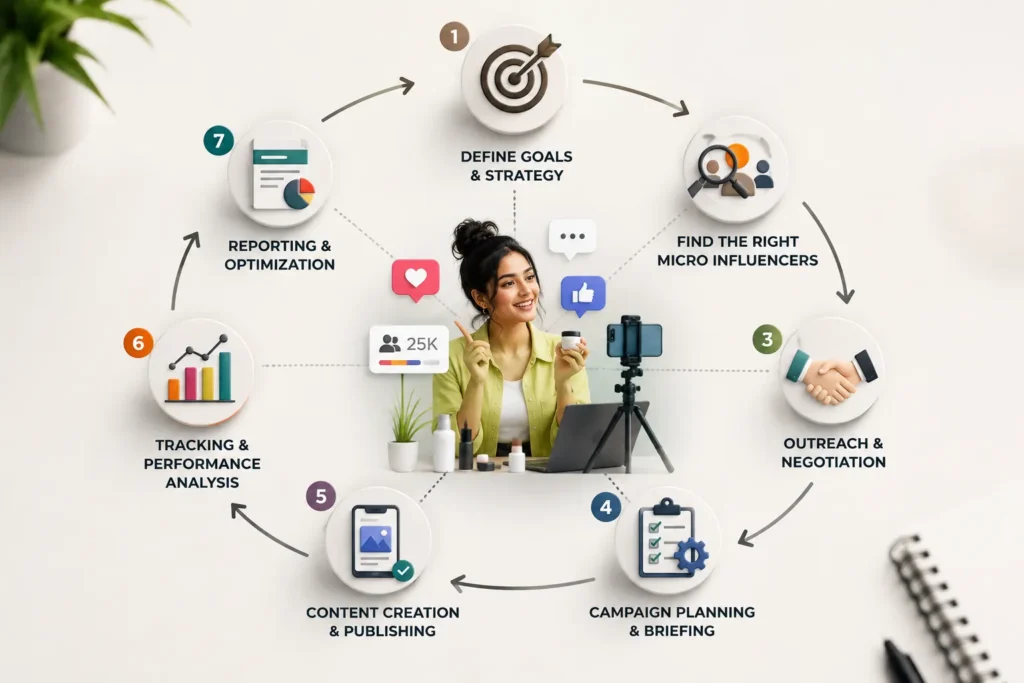
People usually think influencer marketing is just a few emails, pick someone, they post something, done. That’s not even remotely close. A solid agency is basically doing detective work. Here’s what actually happens:
Audit Your Brand: First thing we do is genuinely understand your business. Not just “oh you sell shoes,” but actually dig into it. Why do you exist? What problem are you solving? Who are you actually trying to reach? What does success look like? What’s already working? What’s failing?
The hard questions get asked. The current audience gets examined. Competitors get looked at. Positioning gets figured out. This isn’t surface-level stuff. This is real, deep work.
Most agencies spend two hours in kickoff meetings just asking questions before mentioning a single influencer. It feels slow. But by the end, the agency understands the brand better than the brand understands itself. That’s the difference between good and mediocre.
Find the Right Fit: This is where amateurs mess up. They literally just search Instagram for accounts with high follower counts. Done. That’s their process.
Good agencies? They’re looking at engagement patterns. Comment quality. Is it real engagement or just spam? The influencer’s audience gets examined. Does it actually match who the brand is trying to reach? Content gets reviewed. Is it aligned with the brand? Would their followers even care about the product?
This is where most campaigns fail. Wrong influencer. Wrong audience. Wrong fit. It’s not even the influencer’s fault. They just weren’t the right match.
Negotiate Fairly: A good agency has built relationships with creators. Fair rates are understood. No overpaying because of ignorance. No undercutting either. There’s a sweet spot, and good agencies know exactly where it is. Both the brand and creators get protected.
Manage Campaigns: Campaigns actually get managed. Creators get briefed properly—and this is important because miscommunication kills campaigns. Content gets reviewed before going live. Posting schedules get coordinated. Back-and-forth gets handled. Basically, the agency becomes project manager for the entire influencer strategy.
Track Real Metrics: Not just “how many likes?” That’s meaningless. Real metrics get tracked: engagement rate, click-through rates, actual conversions, sentiment in comments. What’s working? What’s not? Why? Brands get told what’s actually happening.
Build Long-Term Relationships: The best agencies don’t just run one-off campaigns. Ongoing relationships with creators get built. Because here’s the thing that most people don’t realize—the longer a creator works with a brand, the better they understand it. The more authentic their content becomes. The better results get delivered. It’s a partnership, not a transaction.
The Micro Influencer Marketing Strategy That Actually Works (Lessons From Real Campaigns)
Based on what we’ve seen work:
1. Go Niche Over Viral: Everyone wants to go viral. Viral is the dream, right? Viral equals millions of eyes. But here’s reality. Viral is a lottery ticket. What actually works, what’s predictable, what gives consistent results? Picking 10 micro-influencers in a specific niche rather than betting everything on one celebrity who might—or might not—go viral. More genuine potential customers get reached. More chances to win. Risk gets diversified. It’s just a smarter strategy.
2. Prioritize Engagement Rate (Seriously, This Matters More Than People Think): Stop looking at follower counts. Just. Stop. A 2% engagement rate on 50,000 followers is infinitely better than 0.1% engagement on 5 million followers. We see this mistake constantly. Brands chase big numbers and completely ignore whether people actually care. Then they’re shocked—SHOCKED—when the campaign tanks. Of course it tanked. Nobody was engaging with the content. Engagement rate is everything. Look at that metric. That’s the one that matters.
3. Give Creators Creative Freedom (Don’t Script Everything): The worst campaigns? Dictated. Detailed bullet points about exactly what to say. Every word is scripted. Managed to death. The best campaigns? Those where creators get a brief—solid information about the product, key messaging points, but then it’s “Now tell your audience about this in your voice. “That’s where the magic happens. That’s where authenticity lives. Trust the creators. They know their audience. They know what lands. They know the vibe. Let them do their thing.
4. Mix Your Content Types (Don’t Put All Eggs in One Basket): Don’t just do static posts. Mix it up. Stories, reels, carousels, whatever. Different content performs differently. Different audiences consume content in different ways. Some people only watch Stories. Some only engage with Reels. Some like carousels. You want everything. You want variety. You want to be everywhere. Different content formats reach different people. Mix it up.
5. Long-Term Partnerships Over One-Off Posts: Instead of booking one post, try a 3-month or 6-month partnership. When a creator works with a brand over time, they get to know it better. The audience stops seeing it as a random ad and starts seeing it as this creator’s genuine recommendation. Integration becomes deeper. Results compound over time. It’s like the difference between a first date and an actual relationship. One-off posts? First date energy. Partnerships? Real relationships. Someone actually getting to know and care about the brand. The results speak for themselves.
Common Mistakes Brands Make (We See This Constantly)
First: Brands keep jumping into micro-influencer marketing without any actual strategy. Just “Oh, let’s try this influencer thing!” without thinking about who to reach or what to achieve. No planning. No strategy. Just vibes. Then shocked—absolutely SHOCKED—when it doesn’t work.
Second mistake: They pick creators based on vibes. “Oh, I like this person’s energy” rather than actually looking at the data. Does their audience match? Is the engagement real or just bots? Do they align with the brand? Do their followers even care about this type of product? That’s just a lazy strategy.
Third: Not enough detail in the brief. Vague about what they want. Creators either guess wrong or create something that doesn’t fit. Miscommunication kills campaigns. We’ve seen this so many times.
Fourth: They expect viral posts. Like one post is going to blow up and change everything. No. You should expect consistent, authentic engagement that builds over time. Not viral. Steady. Building. But honestly? The biggest mistake—and this is the one that frustrates us—is when brands treat micro influencers like they’re just cheap alternatives to celebrities. That’s such a wrong way to think about it. Fundamentally misunderstanding what’s happening.
Micro influencers aren’t diet celebrities. They’re not “celebrities but cheaper.” They’re a completely different strategy. For brands that actually care about business results instead of just vanity metrics—vanity metrics like follower counts that don’t translate to sales—micro-influencers are often the BETTER choice. Not cheaper. Better. Different thing entirely. There’s a huge difference, and people keep missing it.
What’s Next for Your Brand? (Seriously, Don’t Sleep On This)
If you’re running a brand right now in 2026 and you’re not actively using micro-influencers, you’re leaving money on the table. The data is there. The case studies exist. Brands are running circles around competitors because they figured this out.
Whether you’re a D2C brand trying to scale, an established company breaking into new markets, or a startup building community from scratch—micro influencer marketing can be the growth lever that actually moves the needle. So here’s the real question: Why haven’t you started yet?
The logistics can feel complicated. Figuring out which creators to work with. Managing campaigns. Measuring the right things. It feels like a lot. That’s where a partner comes in. A good micro-influencer marketing agency will take the guesswork out of it. Find authentic creators who fit the brand. Manage the entire campaign. Measure what actually matters. Build a strategy that moves business metrics. That’s way more valuable than trying to figure it out alone. Because here’s the future of influencer marketing in India—and everywhere, honestly. It’s not about splashing huge budgets on mega-celebrities anymore. That era is over.
It’s about finding the right voices for your brand. It’s about giving those creators creative freedom to be authentic. It’s about building real connections with audiences who actually give a damn about your product. Real people. Real engagement. Real business results. It’s straightforward. And it works.
So if you’re ready to explore this, get a real partner who knows what they’re doing. Someone who understands your brand, understands the Indian market, understands creators, and can help you put it all together. That’s Admardi.